

 tel:+86-18825224069
 email:
 address:201, Factory 6, Longhui Industrial Park, Fuqiao 3rd District, Xinhe Community, Fuhai Street, Baoan District, Shenzhen china
FR4 vs Aluminum PCB: How to Choose the Right Substrate
Release date:2026-11-12 11:58:15 Number of views:0
Quick answer: Choose FR4 when you need multilayer routing, fine-pitch components, or the lowest material cost — it covers roughly 80% of all PCB designs. Choose aluminum PCB (IMS) when your design generates serious heat — LED lighting, power converters, motor drivers — because its metal core moves heat 5–10× more effectively than FR4. Most projects never need aluminum; the ones that do cannot safely use FR4. If you are unsure, send your stack-up to our engineering team before committing to a substrate.
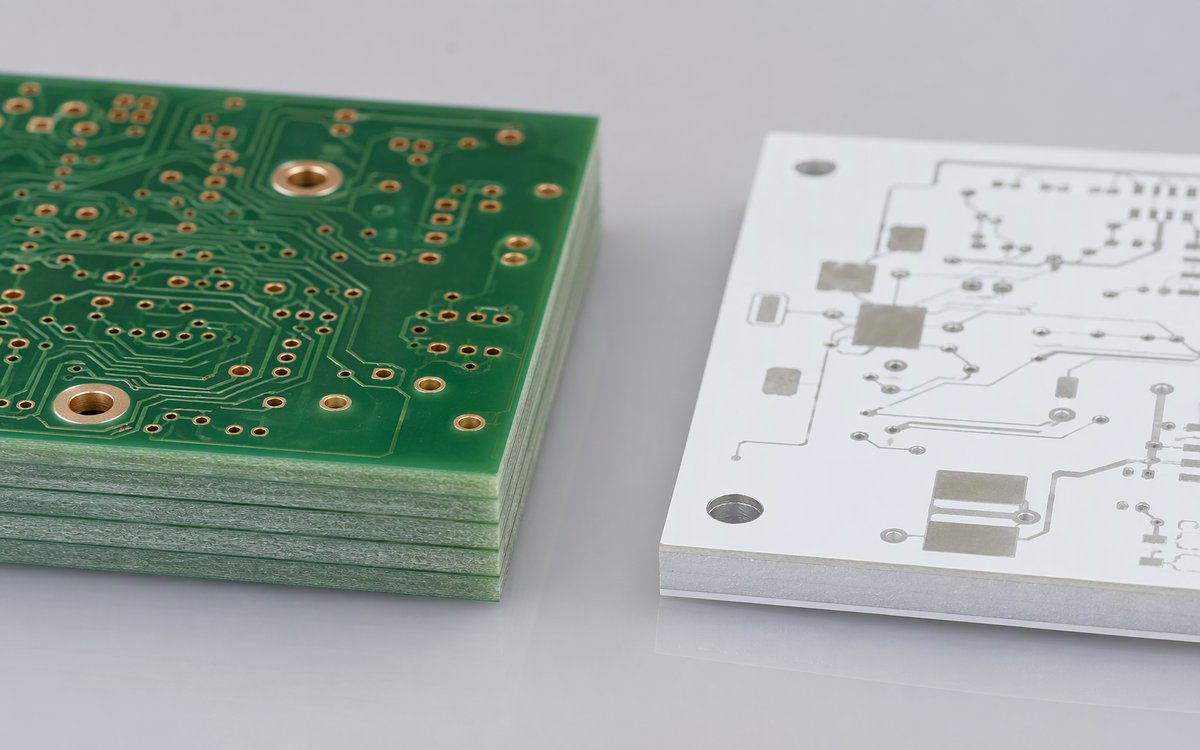
This guide compares FR4 and aluminum PCB across the six factors that actually decide the choice: thermal behavior, electrical performance, mechanical strength, cost, manufacturability, and typical applications.
What Is FR4?
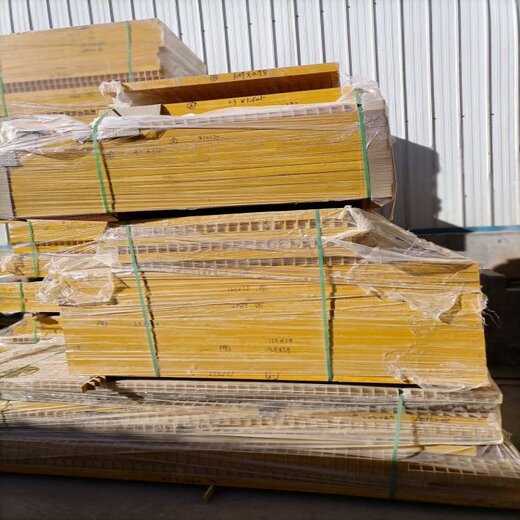
FR4 is a glass-reinforced epoxy laminate — woven fiberglass cloth bonded with flame-retardant epoxy resin. It is the default substrate of the entire electronics industry: rigid, dimensionally stable, electrically insulating, and cheap. Standard FR4 supports 1–20+ layer stack-ups, fine line/space down to 3/3 mil in advanced shops, and every common surface finish (HASL, ENIG, OSP, immersion tin).
Its one weakness is thermal conductivity: standard FR4 conducts heat at only about 0.3 W/m·K — essentially an insulator. High-Tg FR4 variants improve temperature endurance but not conductivity.
What Is an Aluminum PCB?
An aluminum PCB (also called metal core PCB, MCPCB, or insulated metal substrate / IMS) is a three-layer sandwich: a 1–3 mm aluminum base plate, a thin thermally conductive dielectric layer (50–150 µm), and a copper circuit layer. The aluminum base acts as a structural plate and a heat spreader; the dielectric electrically isolates the copper from the metal while transferring heat far better than FR4.
Thermal conductivity of the dielectric layer typically runs 1–3 W/m·K, and the aluminum base itself exceeds 200 W/m·K — which is why metal core boards keep LEDs and power devices dramatically cooler than FR4 of the same design.
FR4 vs Aluminum PCB: Side-by-Side Comparison
| Factor | FR4 | Aluminum PCB |
|---|---|---|
| Thermal conductivity | ~0.3 W/m·K | 1–3 W/m·K (dielectric); >200 W/m·K (base) |
| Layer count | 1 to 20+ | 1–2 layers (3-layer possible, complex) |
| Mechanical strength | Good rigidity, somewhat brittle | Very stiff, vibration-resistant, heavier |
| Min. trace/space | 3/3 mil and finer | Typically ≥ 6/6 mil |
| Plated through holes | Standard | Difficult — vias need insulation; often avoided |
| Material cost | Low | 3–8× FR4 for same area |
| Machining | V-score, rout, drill | Rout only — V-scoring damages the metal base |
| Typical copper weight | 0.5–6 oz | 1–6 oz (heavier for heat spreading) |
Thermal Performance: The Deciding Factor
The entire aluminum PCB value proposition is thermal. Consider a power LED dissipating 3 W on a 12 mm pad. On FR4, the thermal path runs through 1.6 mm of near-insulating laminate, and junction temperature climbs until the LED derates or fails early. On an aluminum board, the same heat crosses a 75 µm dielectric and spreads into the metal plate, often keeping the junction 30–50°C cooler — which translates directly into longer life, stable light output, and higher allowable drive current.
Rule of thumb: if any single component dissipates more than about 1 W and there is no heatsink or forced airflow, evaluate a metal core substrate. Below that, good thermal vias and copper pours on FR4 are usually enough.
Electrical and Design Differences
Routing: Aluminum boards are effectively single-sided. The metal base makes double-sided routing painful — every plated hole must be insulated from the core, and multilayer structures are rare. If your design needs dense BGA escape routing or signal/power plane pairs, that decision is already made: FR4.
Dimensional stability: Aluminum expands and contracts with temperature differently than the copper circuit; long boards under thermal cycling can develop stress at the dielectric interface. FR4's CTE is better matched to copper, which is one reason it remains the default for large, fine-pitch boards.
Mechanical: An aluminum board is stiff, heavy, and handles vibration well — an advantage for automotive and outdoor lighting. But it cannot be snapped apart, and panel depaneling requires routing with dedicated tooling.
Cost Comparison
For prototype quantities, an aluminum PCB typically costs 3–8× an equivalent FR4 board of the same dimensions, driven by the metal plate, the special dielectric, and separate machining steps. In volume the gap narrows but never disappears. Assembly costs are similar; in fact, aluminum boards often assemble better, because flatter, cooler boards see fewer reflow defects.
The economics flip when you count the full system: an aluminum PCB often replaces a separate heatsink, thermal paste, and mounting hardware. For LED products, the "expensive" substrate frequently ends up the cheaper overall solution.
Typical Applications
Choose FR4 for:
- Consumer electronics, IoT, and computing boards
- Any multilayer or fine-pitch (BGA, 0.4 mm) design
- High-voltage isolation barriers
- RF boards needing controlled impedance dielectrics
- Cost-driven, high-volume products without hot components
Choose aluminum PCB for:
- LED lighting — bulbs, strips, downlights, automotive lighting
- Power supplies, DC-DC converters, motor drivers
- Solid-state relays and power semiconductors
- Any design where a heatsink would otherwise be bolted to the board
How to Specify the Substrate When Ordering
When you request a quote, the substrate decision should be explicit in four parameters:
- Base material and Tg: For FR4, state "FR4, Tg 150°C" (standard) or "high-Tg FR4, Tg 170°C" for lead-free reflow or high-temperature environments.
- Dielectric thickness and thermal rating (aluminum): Specify the dielectric thermal conductivity (1, 2, or 3 W/m·K) and thickness (typically 75–150 µm). Thinner dielectrics transfer heat better but reduce insulation margin — 150 µm is the safe default for mains-powered products.
- Copper weight: 1 oz is standard. For aluminum boards carrying LED or power device arrays, 2 oz copper plus the metal core spreads heat noticeably better than either alone.
- Surface finish: ENIG for fine-pitch and shelf life; OSP or immersion tin for cost-driven volume; avoid HASL on fine-pitch pads due to uneven coating.
Also tell the fabricator how the board will be depaneled: aluminum boards must be routed with tabs, never V-scored, and the added routing time should appear in the quote — if it does not, the shop may be planning to score the metal, which will crack the dielectric.
Can You Use Both in One Product?
Yes — many products combine an FR4 control board with a separate aluminum LED or power module. This hybrid approach isolates heat, keeps routing flexible, and lets you update the two sections independently. It is the standard architecture in commercial LED fixtures.
If you are still weighing the options, our engineers review stack-ups and thermal requirements as part of every PCB manufacturing and assembly quote — a wrong substrate choice found at design time costs nothing; found after reflow, it costs a production run.
FAQ
Is aluminum PCB always better for LEDs?
For medium and high power, yes — thermal management is the main determinant of LED lifetime and lumen maintenance. Very low-power indicator LEDs run fine on FR4 with simple thermal vias.
Can aluminum PCBs have plated through holes?
Technically yes, but it is expensive and unreliable: every hole must be insulated from the metal core. Most aluminum board designs use surface-mount components on one side only.
Is FR4 fire-resistant?
Yes — the "FR" stands for flame retardant. Standard FR4 meets UL94 V-0. For higher thermal endurance, specify a high-Tg FR4 (Tg 170°C+) rather than the standard 130–140°C material.
Which substrate is cheaper for prototypes?
FR4, by a wide margin: a prototype aluminum board typically costs 3–8× the equivalent FR4 board. Only pay the premium when thermal testing or the application itself justifies it.
Comment on this article here
-
No comment

Ripple
Hi everyone, I'm Ripple, Sales Director of KFPCBA Tech Ltd. If you are looking for a one-stop PCB and PCB assembly manufacturer in China, KFPCBA is your best choice! Please feel free to contact our team! Thanks!
Contact me now
Relevant content you may be interested in
Related articles