
 tel:+86-18825224069
 email:
 address:201, Factory 6, Longhui Industrial Park, Fuqiao 3rd District, Xinhe Community, Fuhai Street, Baoan District, Shenzhen china
How Much Does PCB Assembly Cost in 2026?
Release date:2026-11-12 11:00:20 Number of views:0
Quick answer: In 2026, most PCB assembly (PCBA) orders fall between $100 and $1,000 for prototypes (5–50 boards) and $0.50–$5 per board in volume production, depending mainly on component cost, board complexity, and order quantity. Component sourcing typically accounts for 60–80% of the total, so two identical-looking quotes can differ by 3× based on BOM choices alone. The fastest way to get an exact number is a detailed online quote based on your Gerber files and BOM.
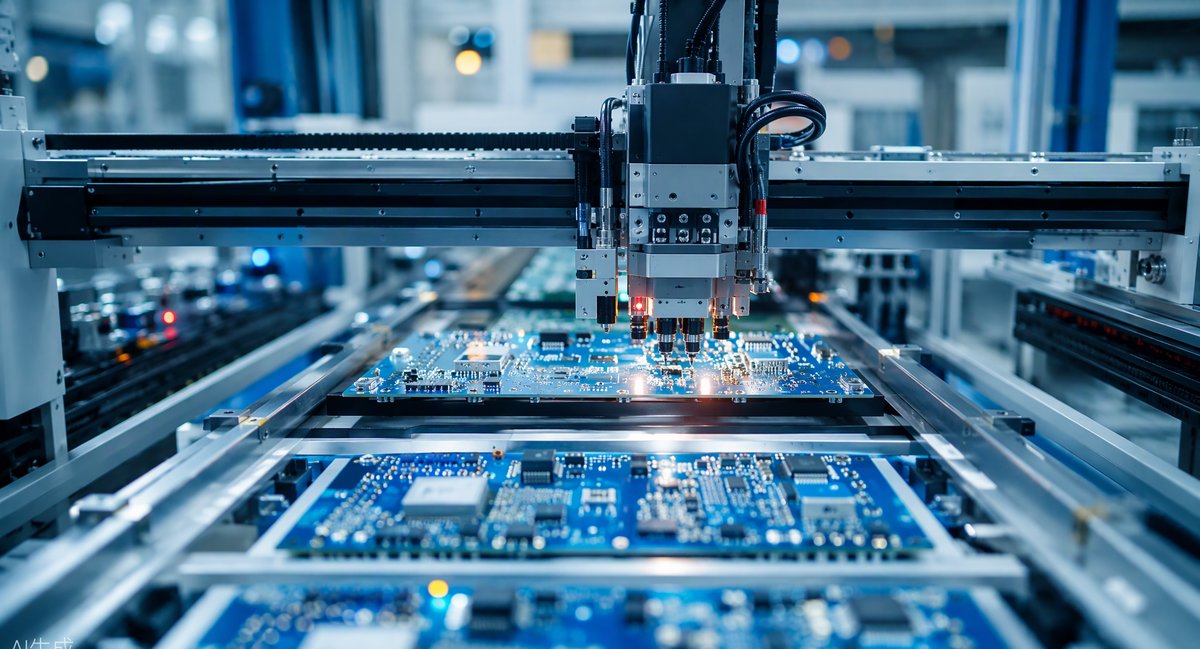
Below is a realistic breakdown of PCB assembly pricing in 2026 — what you should expect to pay, what drives the cost, and how to keep your quote under control.
Typical PCB Assembly Price Ranges in 2026
Every project is different, but these ranges cover most orders a PCBA factory sees:
| Order type | Quantity | Typical total price | Cost per board |
|---|---|---|---|
| Prototype / proofing | 5–10 pcs | $100 – $600 | $15 – $80 |
| Small batch | 50–200 pcs | $500 – $3,000 | $5 – $25 |
| Low-volume production | 200–1,000 pcs | $2,000 – $10,000 | $2 – $10 |
| Mass production | 1,000+ pcs | project-based | $0.50 – $5 |
These figures assume a standard double-sided SMT board of moderate complexity. A simple single-sided board with 20–30 components in volume can cost less than $1 per board to assemble; a dense multilayer board with 1,000+ placements, BGAs, and full test coverage will sit far above these ranges.
Where Every Dollar Goes: A Typical Cost Breakdown
For a representative mid-complexity order — say 200 boards, double-sided SMT with 150 placements per side — the total quote usually splits roughly like this:
| Cost item | Share of total | What it covers |
|---|---|---|
| Components | 60–80% | All BOM parts, sourced per approved manufacturer part numbers |
| PCB fabrication | 10–20% | Bare boards per Gerber: layers, finish, panelization |
| SMT assembly labor | 5–12% | Programming, solder paste printing, placement, reflow |
| Testing & inspection | 3–8% | AOI, X-ray, ICT or functional test as specified |
| Setup / NRE | 2–5% | Stencils, fixtures, first-article inspection (fixed cost, amortized over quantity) |
Notice how small the assembly labor share is: on a turnkey order, the factory's value is mostly procurement, engineering review, and quality control, not machine time. That is why the cheapest quote is rarely the best one — a quote that skips incoming component inspection or AOI is quietly transferring risk to you.
2026 Pricing Trends Worth Knowing
Three trends are shaping PCBA quotes this year:
- Passive components remain cheap and stable. Resistors, capacitors, and standard ICs are at multi-year price lows thanks to expanded Asian capacity, which keeps volume assembly pricing aggressive.
- Lead-time volatility has shifted to specialized parts. Commodity parts ship fast, but automotive-grade chips, specific RF modules, and certain connectors still carry 8–16 week lead times. Factories that stock common parts in-house quote shorter and more stable timelines.
- Consolidation favors turnkey. As more factories bundle fabrication, sourcing, assembly, and testing under one roof, the price gap between "assembly only" and "full turnkey" has narrowed to the point where turnkey is usually the lower total cost — even before counting your own engineering time.
What Actually Drives PCBA Cost
1. Components (usually 60–80% of the total)
The BOM is by far the biggest cost factor. A board with $2 of passives assembles cheaply; a board with an FPGA, RF modules, or imported connectors can cost hundreds in parts alone. Whether components are sourced domestically or from overseas distributors (and current 2026 lead times and exchange rates) also moves the price significantly.
2. PCB fabrication complexity
Layer count, board size, copper weight, surface finish (HASL vs ENIG), and impedance control all add cost before a single component is placed. Assembly on a 2-layer board is straightforward; a 10-layer HDI board requires tighter process control and more inspection.
3. SMT vs through-hole (THT) mix
Pure SMT assembly is highly automated and cheap. Through-hole parts require wave soldering or manual insertion — often 5–10× the labor cost per joint — so a design with many connectors, relays, or transformers costs noticeably more to assemble.
4. Order quantity
Setup costs are fixed: stencil fabrication ($20–80), SMT programming, first-article inspection, and line changeover. On 5 boards, that setup may exceed the assembly labor itself; on 5,000 boards it becomes negligible. This is why unit prices drop so steeply between prototype and production quantities.
5. Testing and inspection requirements
Visual inspection is usually included. AOI (automated optical inspection), X-ray for BGAs, ICT (in-circuit test), functional test, and burn-in each add cost — typically 5–20% of the order total — but dramatically reduce field failures.
6. Turnaround time
Standard lead time of 2–3 weeks is the baseline. Need boards in 48–72 hours? Expect a 30–100% expedite premium on assembly labor.
Hidden Costs to Watch in a Quote
- Stencil fees — charged per side; a two-sided board needs two stencils.
- Component MOQ surcharges — distributors may force you to buy 500 of a part you need 50 of. A good factory consigns or stocks common parts to absorb this.
- Programming and test jig NRE — one-time engineering fees for firmware flashing or functional test fixtures, typically $50–$500.
- Component substitution markups — always approve alternates in writing before production.
- Shipping and customs — for cross-border orders, DDP (delivered duty paid) terms avoid surprise import fees.
Worked Example: A Real-World Quote
Consider a typical IoT controller board: 4-layer PCB (80 × 60 mm), 120 SMT placements per side, 8 THT connectors, and one module that costs $6.50. Two hundred units, turnkey, standard 2-week lead time:
- Components (all parts, incl. the $6.50 module): about $9.20/board → $1,840
- 4-layer bare PCB fabrication: about $1.10/board → $220
- SMT + THT assembly labor: about $1.80/board → $360
- Stencils, programming, fixtures (one-time): $180
- AOI inspection + functional test: about $0.60/board → $120
Total: roughly $2,700–2,900, or about $14 per board. Scale the same design to 2,000 units and the per-board price typically falls to $11–12, driven almost entirely by amortized setup costs and better component pricing. This example also shows why the $6.50 module dominates the BOM — for cost-sensitive designs, module selection matters more than any assembly decision.
Red Flags in a Suspiciously Low Quote
- No line-item BOM pricing — you cannot verify what parts they actually quoted.
- Unapproved alternates — "equivalent" parts substituted without written approval can fail certification or field reliability.
- Testing excluded — inspection listed as "visual only" on a dense or BGA board is a warranty claim waiting to happen.
- No incoming inspection — counterfeit or date-code-sensitive components enter at receiving; without IQC, they end up in your product.
- Vague lead-time terms — "about 2 weeks" with no penalty clause often becomes 5.
Turnkey vs Consignment: Which Sourcing Model Costs Less?
| Model | You supply | Factory supplies | Best for |
|---|---|---|---|
| Full turnkey | Gerber, BOM, coordinates | All components + PCBs | Most orders; lowest total cost and risk |
| Partial turnkey | Expensive or allocated ICs | Everything else | Designs with scarce or price-sensitive chips |
| Consignment | All components | Labor + PCBs only | High-volume runs with established supply chains |
For prototypes and low-volume runs, full turnkey is almost always the cheapest option when you count total landed cost: factories buy passives at 10–30% below retail, absorb MOQ surpluses across customers, and take responsibility for part quality. Consignment only wins when you already hold stock at competitive prices or when your design uses allocated components you have secured directly.
How to Get an Accurate 2026 Quote Fast
Factories can quote precisely when you provide three things: Gerber files, a BOM with manufacturer part numbers, and a pick-and-place file (or at minimum the assembly drawing). With those, a professional factory can return a detailed line-item quote within 24 hours. You can start right now with our online PCBA quote form, and review our full PCB SMT assembly service capabilities and pricing structure to see exactly what is included at each tier.
FAQ
How much does it cost to assemble a single prototype PCB?
A one-off or small prototype run (5–10 boards) typically totals $100–$600, with most of that going to fixed setup costs like stencils, programming, and first-article inspection rather than per-board labor.
Why did two factories quote me 3× different prices for the same board?
Almost always the BOM: one factory quoted generic or domestic alternates while the other quoted original manufacturer parts. Exchange rates, lead times, and included testing levels create further spread. Always compare quotes line by line on parts, not just totals.
Is it cheaper to source my own components?
For expensive ICs, sometimes — consignment can save 10–20%. But factories buy passives and common parts in bulk at far lower prices than retail, so full turnkey assembly is usually cheaper overall and shifts sourcing risk to the factory.
What is the cheapest way to reduce my PCBA cost?
Four moves give the biggest savings: consolidate to fewer unique part numbers, replace THT parts with SMT where possible, panelize small boards to speed assembly, and order at least 2–3× your immediate need to dilute setup costs.
How long does PCB assembly take in 2026?
Standard turnkey production runs 2–3 weeks including component sourcing; 48–72 hour expedited assembly is available at most factories for a 30–100% premium on labor.
Comment on this article here
-
No comment

Ripple
Hi everyone, I'm Ripple, Sales Director of KFPCBA Tech Ltd. If you are looking for a one-stop PCB and PCB assembly manufacturer in China, KFPCBA is your best choice! Please feel free to contact our team! Thanks!
Contact me now
Relevant content you may be interested in
Related articles